
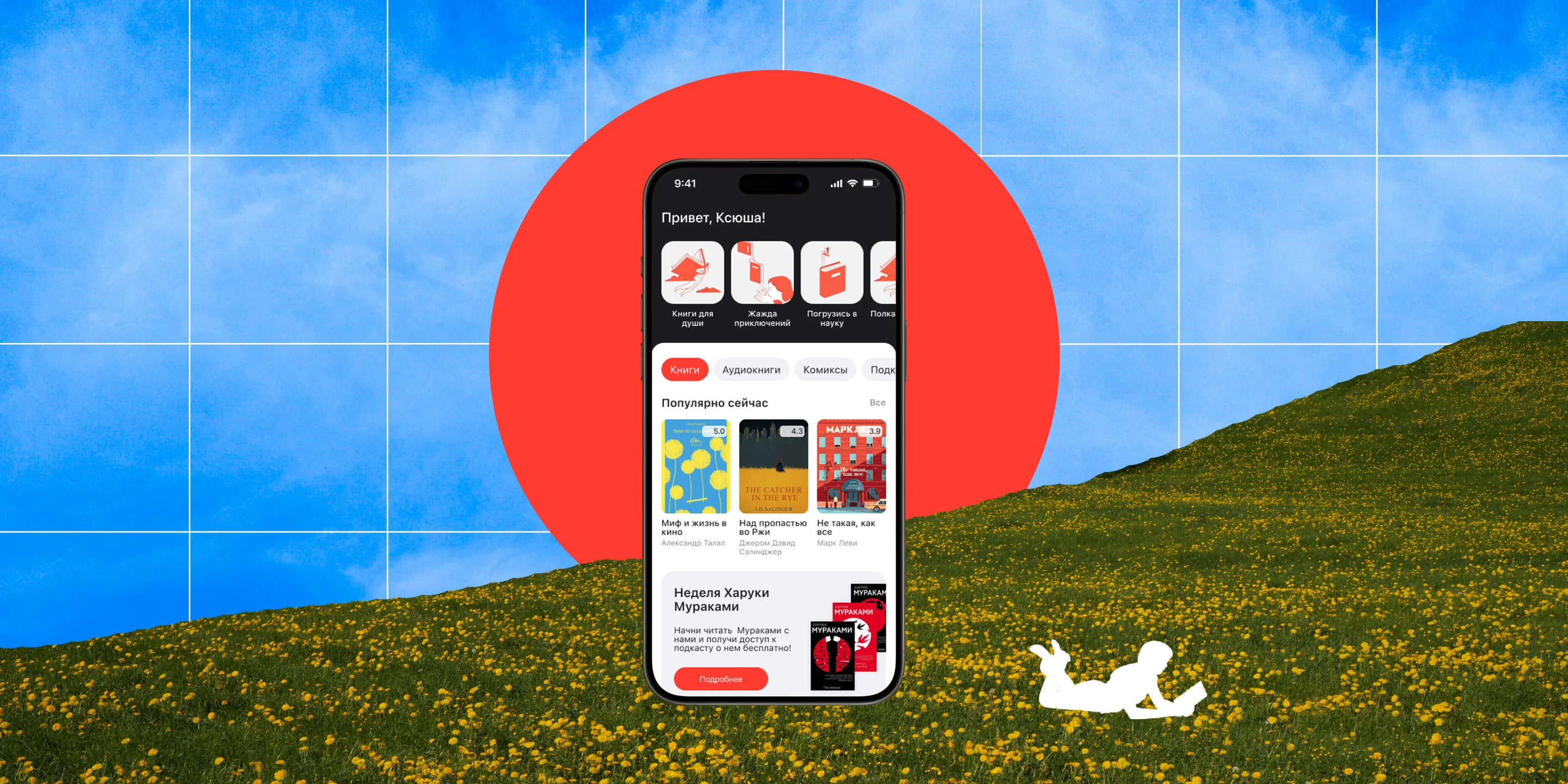
Litara
A mobile library for discovering, reading and listening to books wherever you are.
- Type
- Study project
- Timeline
- Sep 2024 — May 2025
- Role
- Product and UX/UI designer
Project goals
01Understand the needs of different reader groups
02Define how users discover and evaluate books
03Prioritise the core features for the first version
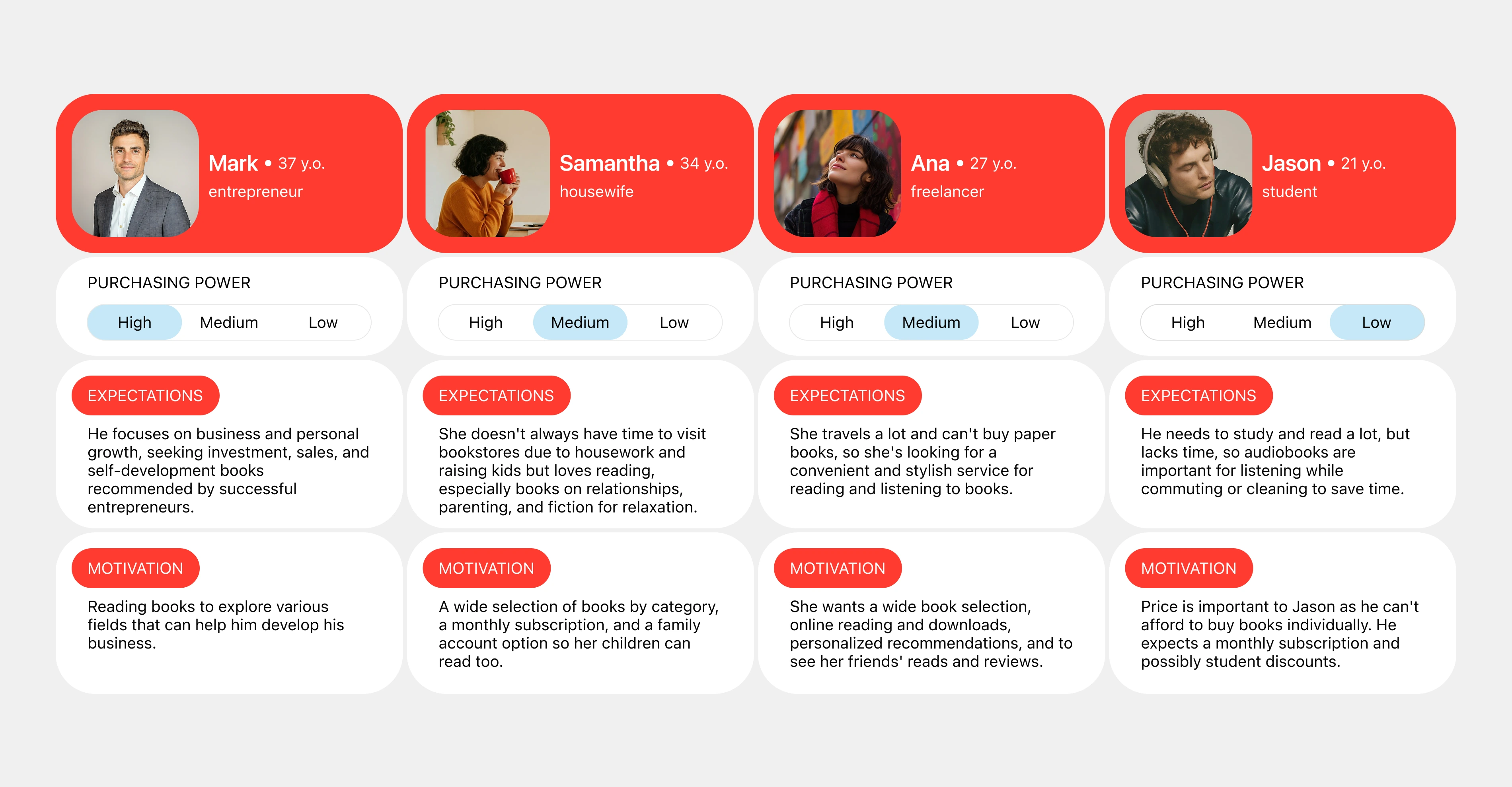
Audience hypotheses
I started with four possible reader groups based on their lifestyle, budget and reading habits. These profiles helped me decide what to explore in the interview.
Reader interviews
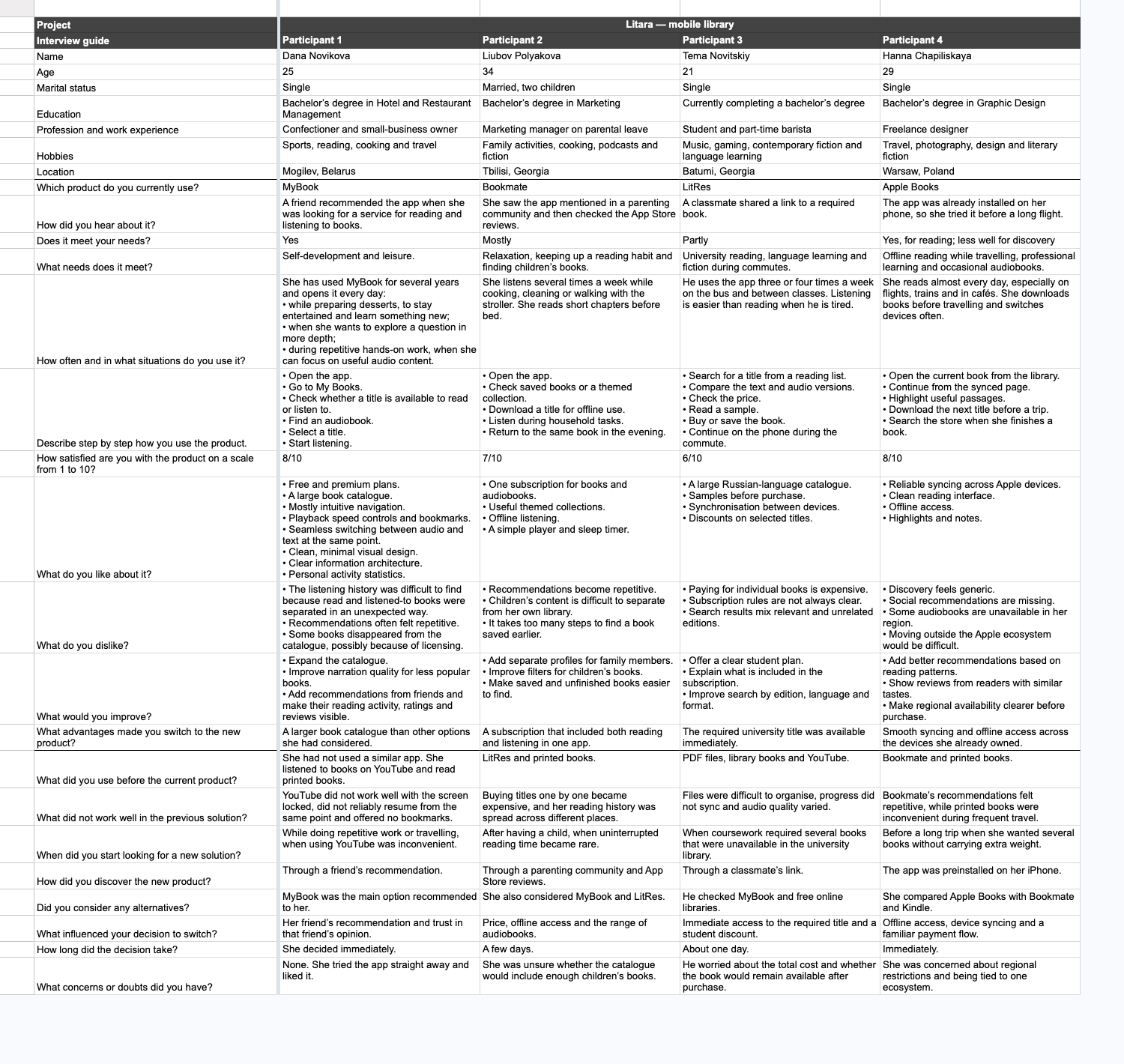
I compared four reader profiles aged 21–34. Each used a different service: MyBook, Bookmate, LitRes or Apple Books.
I focused on simple questions: when they read or listen, how they choose books and what makes them stay with a service.
I kept the answers in one table so I could compare habits, needs and common problems across the four profiles.
Key insights
Audio fits into everyday routines
Audiobooks were often used while cooking, cleaning, walking or commuting.
Switching between formats matters
Readers valued being able to continue the same book in text or audio without losing their place.
Discovery needs relevance and trust
Participants relied on recommendations from friends, while in-app suggestions often felt repetitive or generic.
Competitive analysis
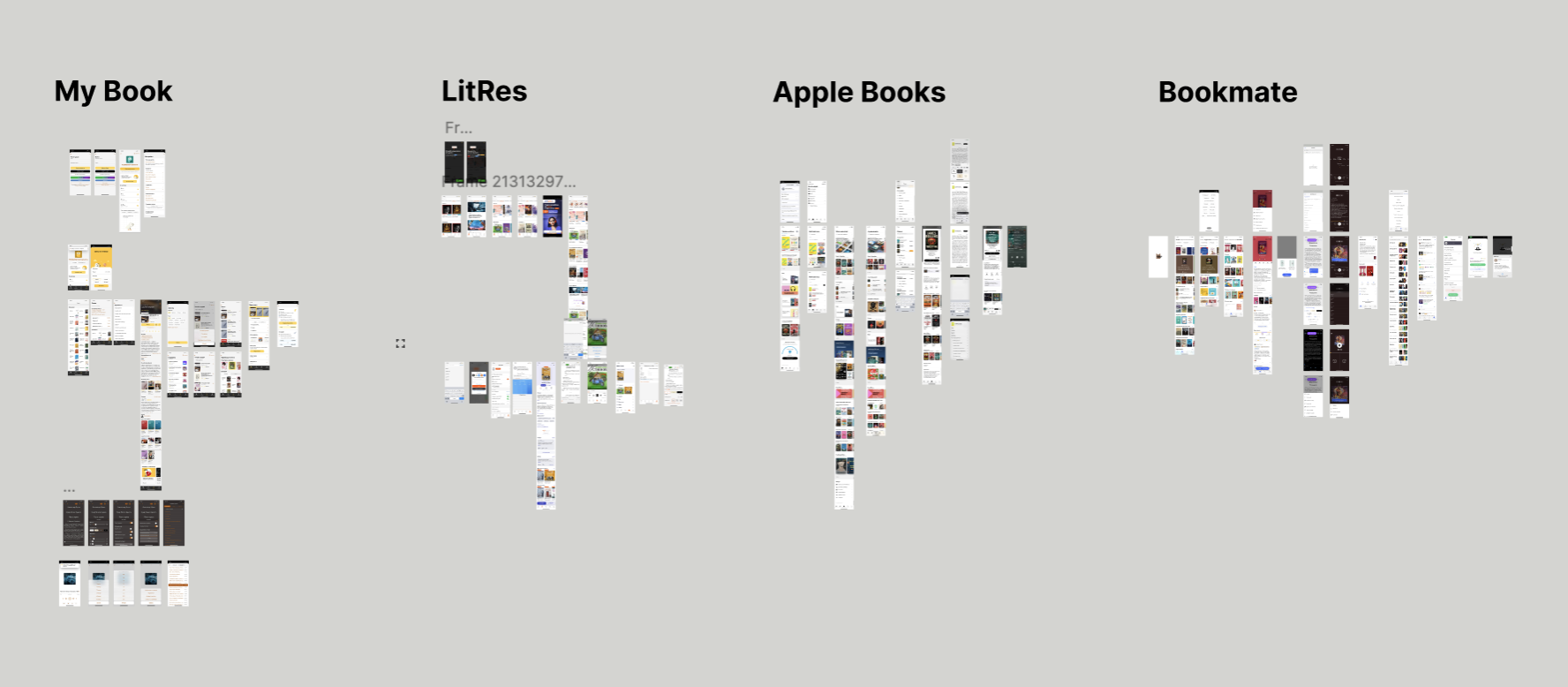
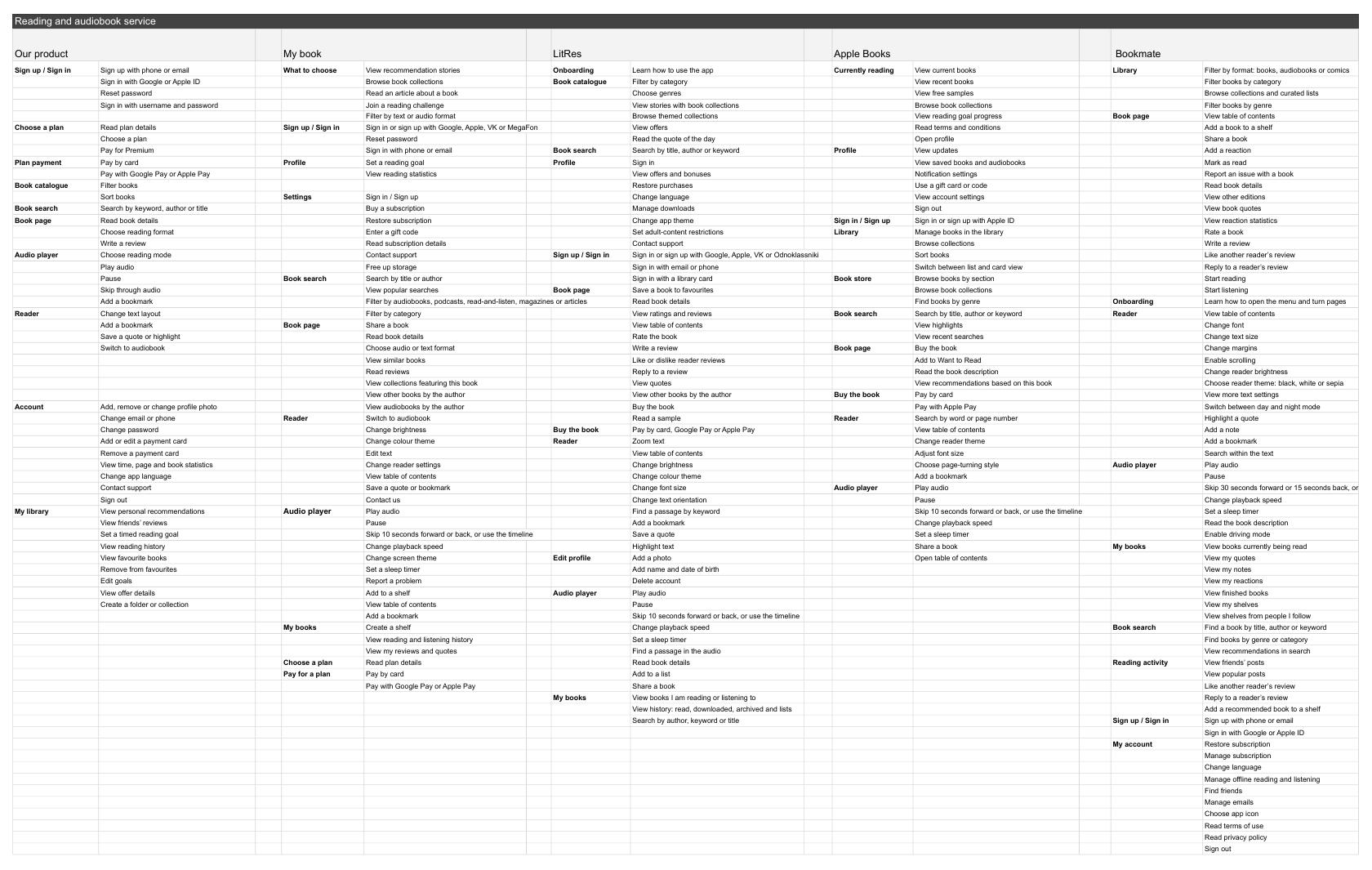
I analysed MyBook, LitRes, Apple Books and Bookmate across catalogue navigation, search, book pages, reading, listening and library management. Search, clear book information and standard reading controls were common across the apps. The main opportunities were better discovery, recommendations from friends and an easier switch between reading and listening.
Product structure
I organised Litara around the complete reading journey: discover a book, evaluate it, read or listen, save it and return later.
Key screens
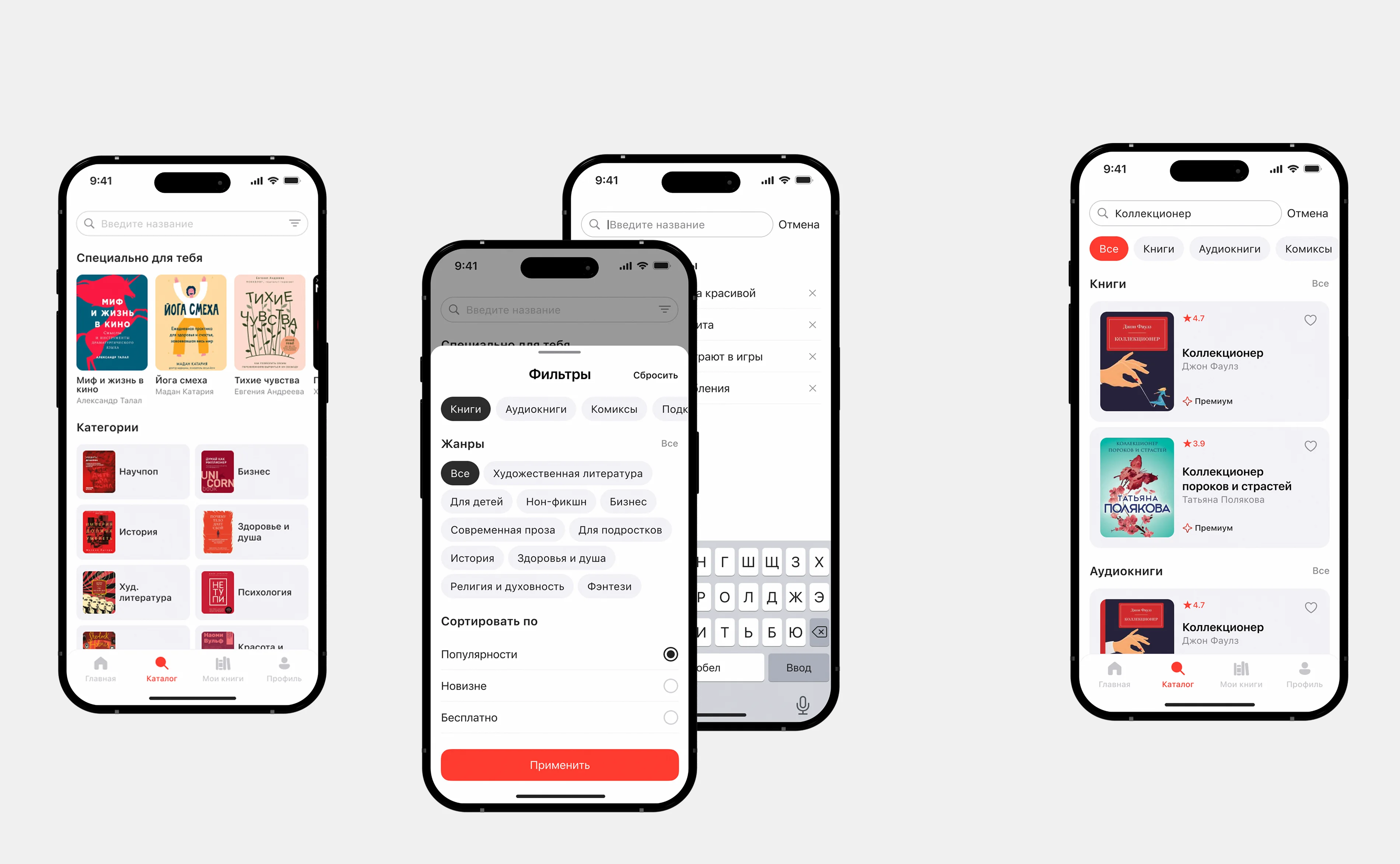
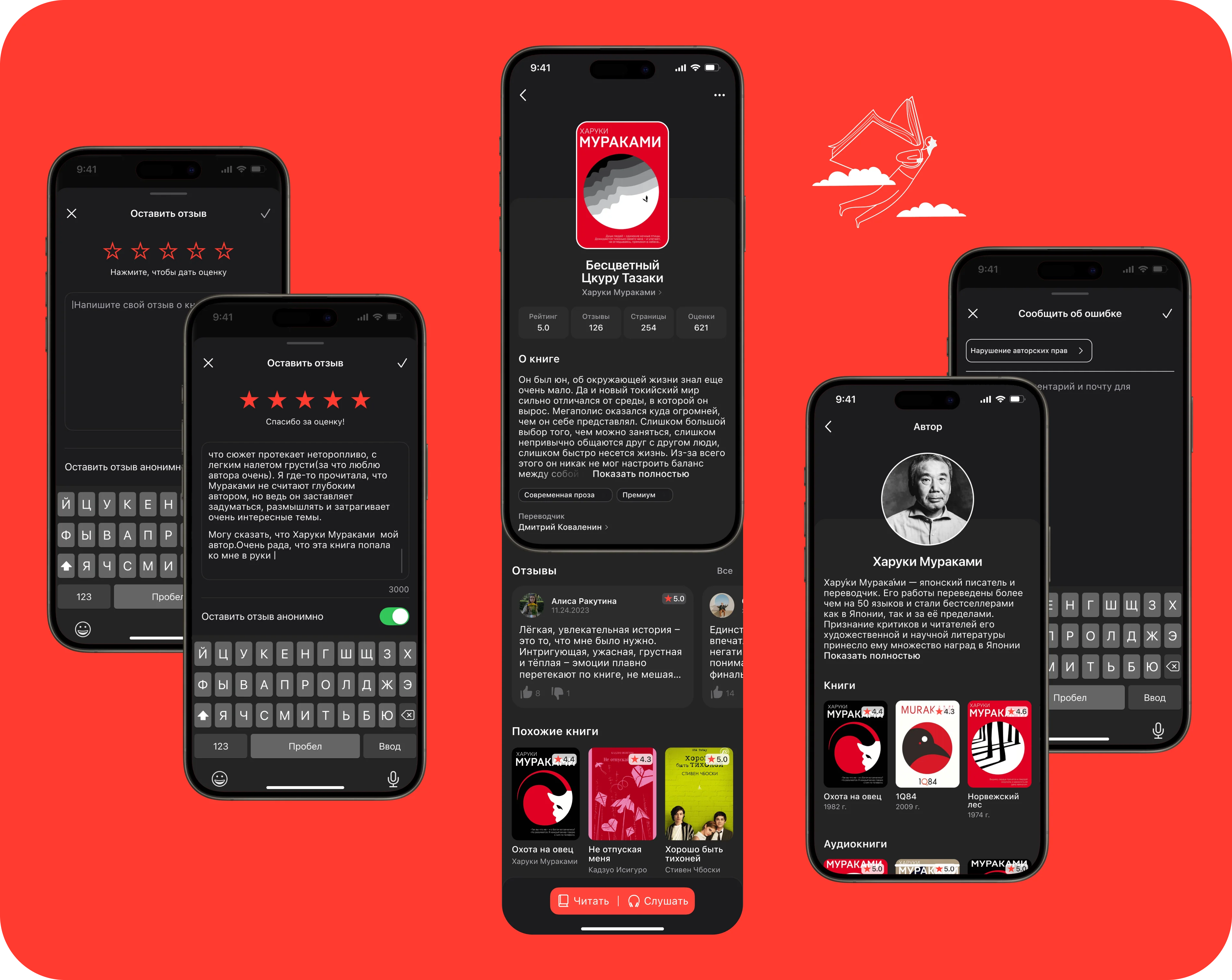
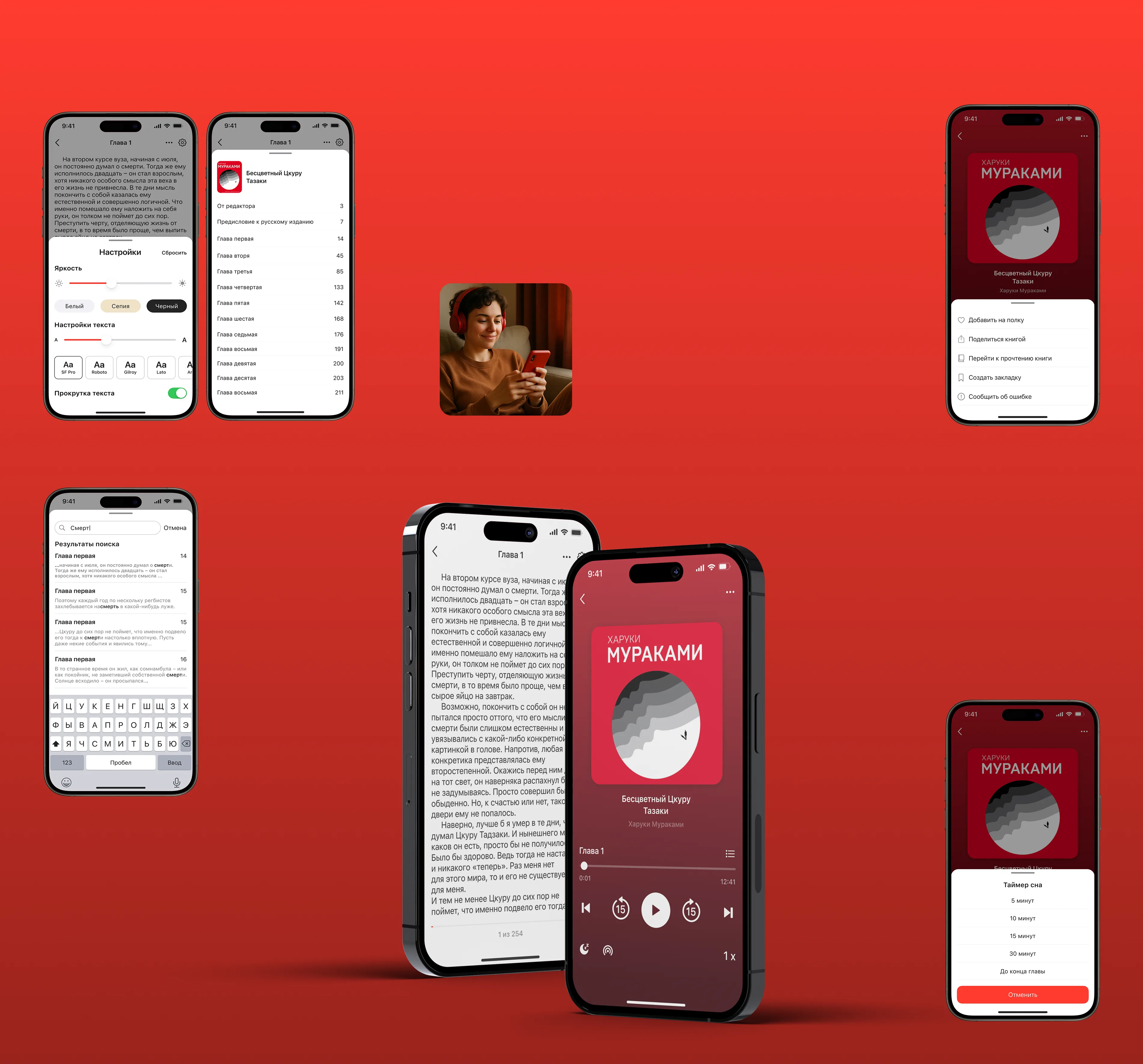
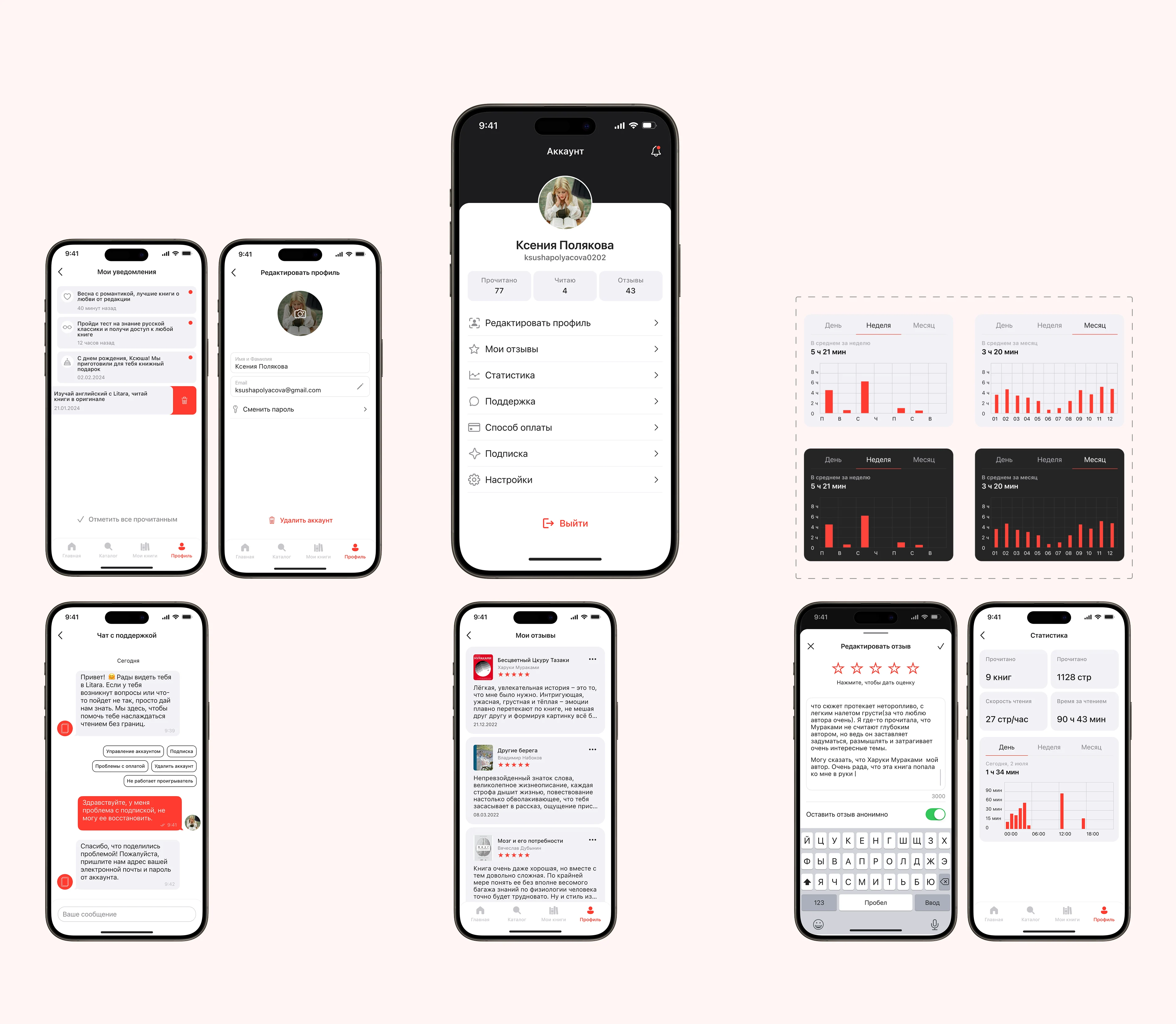
The main experience brings together finding a book, exploring its details and moving naturally between reading and listening.
Design system
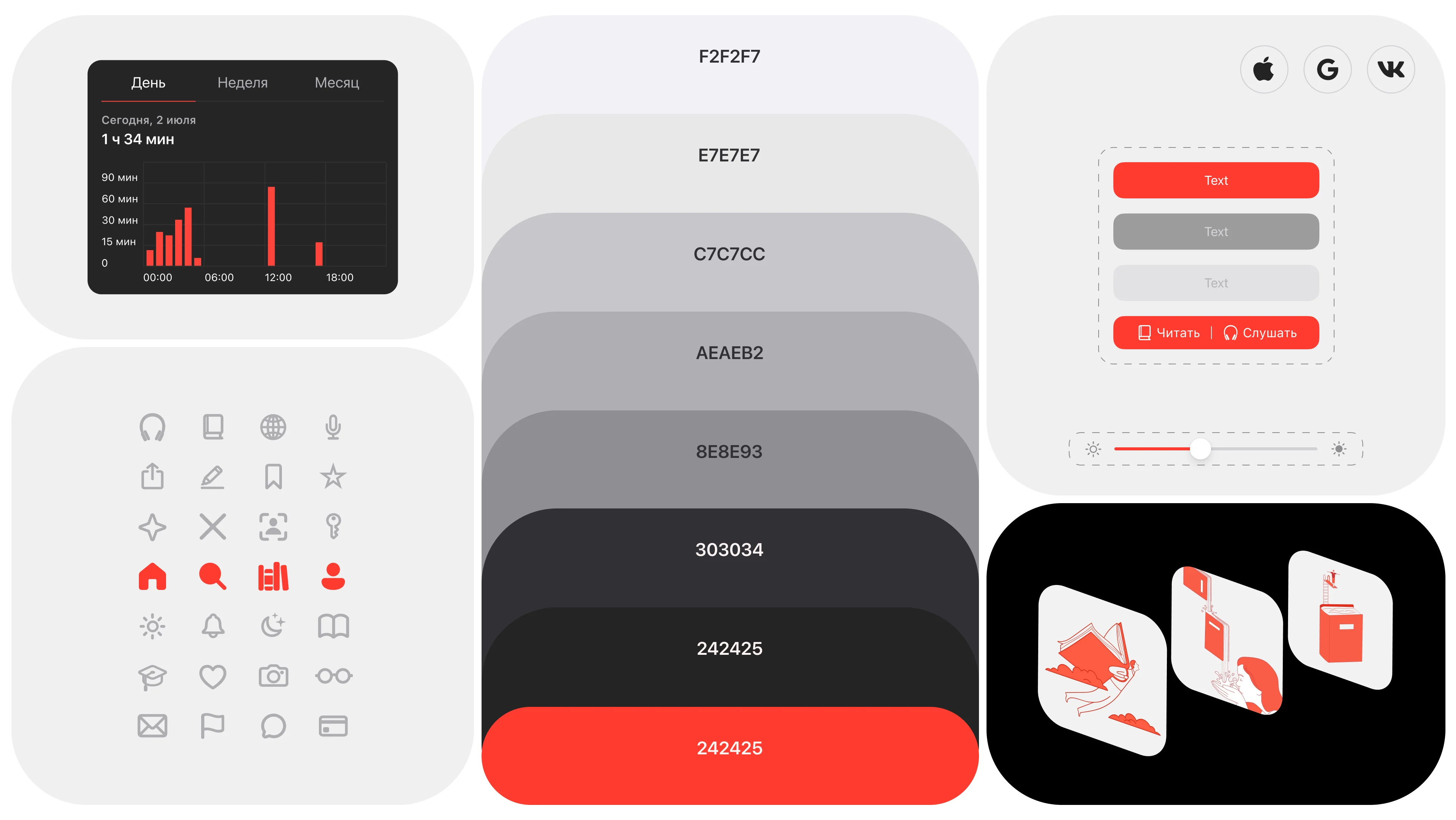
Neutral surfaces keep content-heavy screens readable, while Litara red highlights primary actions and active states.
SF Pro and familiar iOS patterns create a consistent experience across the catalogue, reader and audiobook player.
Outcome
Litara resulted in a high-fidelity prototype that connects book discovery, evaluation, reading, listening and personal progress within one consistent system.
Working independently across the entire project helped me turn initial audience assumptions and qualitative research into a structured product experience.